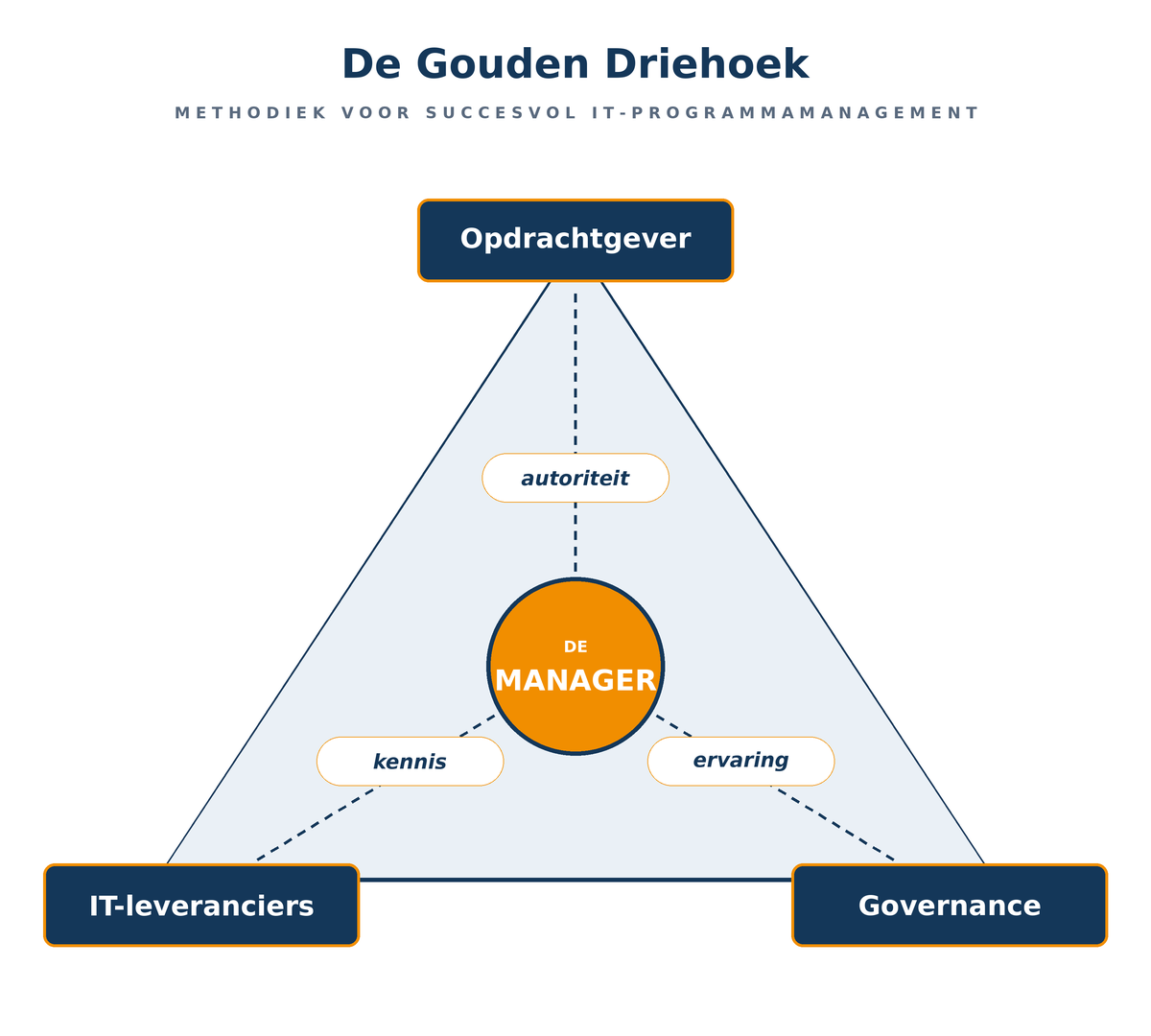
Recognise the management issues behind programme problems
The model examines three recurring weaknesses. On the client side, the programme may be too broad, requirements may remove flexibility, procurement may lack sufficient substance or senior responsibility may be too far from daily decisions.
Supplier incentives can diverge from the organisation’s objectives. The client therefore needs enough knowledge to assess feasibility, challenge proposals and hold suppliers accountable for their contribution.
Governance can also be too weak for the programme’s complexity: managers may be chosen for availability rather than relevant experience, communication may pass through too many layers and risks may reach decision-makers too late.
Bring the three sides into balance
Client leadership requires direct contact with the responsible executives, willingness to give difficult advice and concise reporting to the board. Formal responsibility needs to be supported by active involvement.
Technical direction requires the ability to understand architecture, risks and supplier arguments. The manager needs enough IT depth to ask difficult questions and judge the implications of the answers.
Governance should fit the complexity of the work. Select internal and external contributors on demonstrated capability, establish clear decision-making lines and keep feedback to the responsible client short.
What the central manager must bring
The role combines three capabilities. Senior authority allows the manager to speak with executives as a peer and resist pressure when a proposal is not sound. Advanced IT knowledge supports an informed discussion of architecture and technical risk. Programme experience helps identify patterns before they become a crisis.
The original model describes IT knowledge at master’s level and experience of leading or recovering large programmes. These are criteria for examining a person’s suitability for a particular mandate, rather than a substitute for assessing the assignment itself.
Questions to address in the first three months
- Does the programme manager combine authority, technical depth and relevant programme experience?
- Is the formal client actively involved in the work and the decisions it requires?
- Are there direct communication lines between the programme and the board?
Strengthen the structure over three to twelve months
Bring responsibility and authority into alignment. Consider an independent programme assessment by people with relevant recovery experience. For major procurement, examine whether an independent programme adviser should support the client.
These time horizons organise the discussion; they do not promise a fixed implementation schedule. The required changes depend on the programme and the organisation’s decision-making process.